The History of Perfume
From temple incense and royal distillation to the French perfumers and the modern fragrance industry.
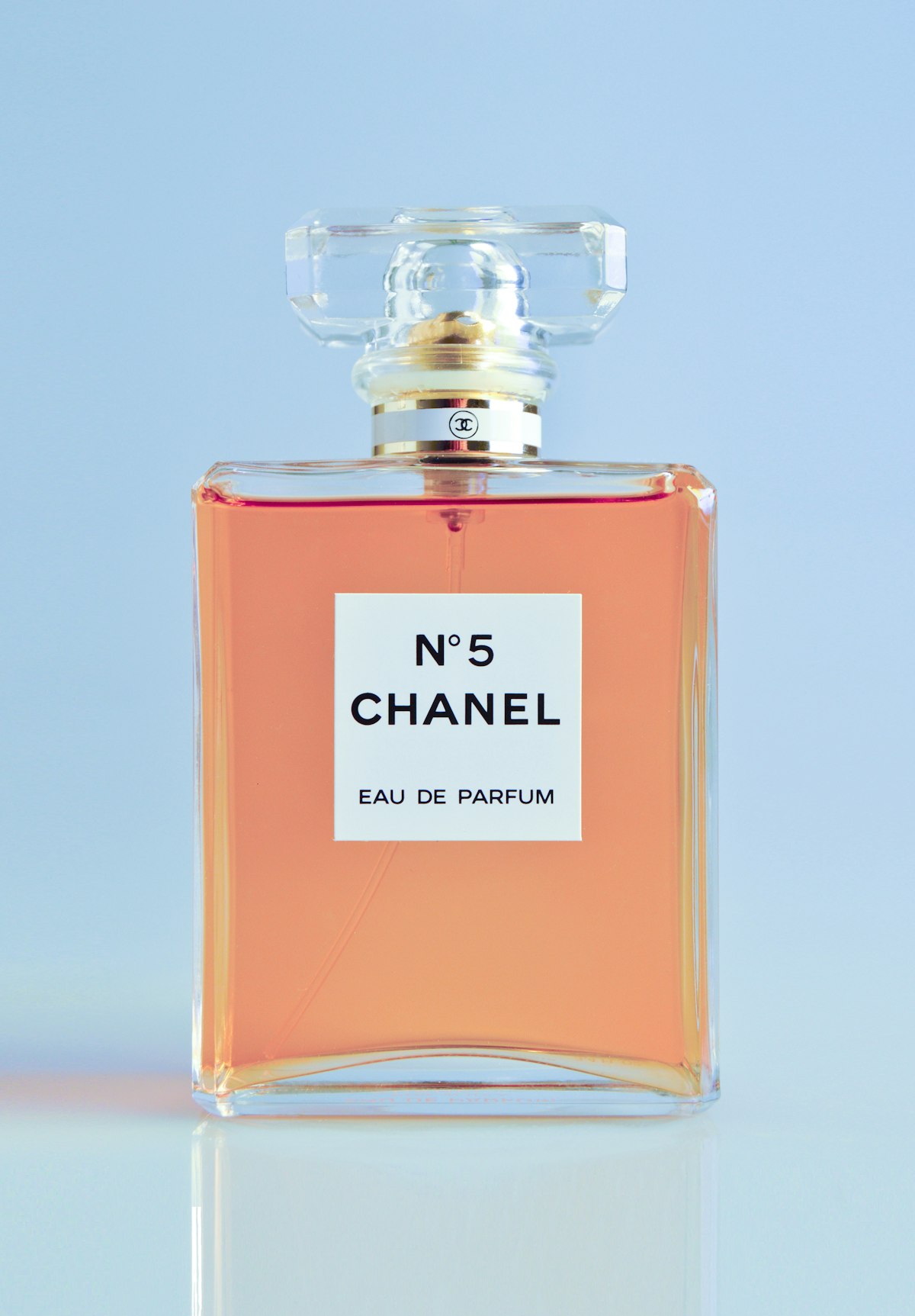
The word perfume comes from Latin per fumum, meaning through smoke. That is a fair description of its beginnings. The first fragrances were smoke and oil, burned in temples and applied to skin in the hot climates where daily bathing was less available than it is now. The history of perfume is a long move from smoke to liquid, from ritual to fashion, and from a handful of raw materials to thousands of formulated scents.
Incense, oils and the ancient world
Archaeologists have found evidence of perfume making in ancient Egypt, Mesopotamia and the Indus Valley. The Egyptian city of Pichne, near the Red Sea, appears to have produced frankincense and myrrh on an industrial scale thousands of years ago. These resins were burned in temples and ground into oils. They were also placed in tombs, which is why we know about them.
The ancients did not separate scent from medicine or religion in the way we do. A fragrant oil could be an offering to a god, a treatment for the skin, or a way to mask the smell of a crowded city. In Egypt, the practice of applying scented oils after bathing was common among the wealthy. Cleopatra is associated with a perfume made from a blend of flowers and resins, though the exact recipe is lost.
The Greeks and Romans inherited the trade and expanded it. Rome imported vast quantities of frankincense from Arabia and spices from India. Perfume was worn at banquets, sprinkled on guests, and used in the baths. The poet Martial wrote about the cost of the good stuff and the fake stuff that was passed off as it, which suggests that a market for counterfeit fragrance existed almost from the start.
Distillation changes the material
For centuries, scents were made by infusing oils and fats with flowers, resins and spices. The result was heavy and greasy. The technique that changed this was distillation, the process of heating a plant material and collecting the vapour as it cools. Arab chemists refined the method in the medieval period, and by the Renaissance, distilled spirits were being used to carry fragrance.
The most important result was rose water, and later rose oil. Producing rose oil takes an enormous number of petals; it takes several tonnes of roses to make a single kilogram of the oil known as rose absolute. That ratio explains why certain materials were expensive and why perfume was a luxury for so long.
In the seventeenth and eighteenth centuries, the centre of the trade moved to Europe. Italy and then France became the places where perfumers worked, and the city of Grasse in the south of France became the hub of flower growing and scent making. Grasse had the climate for roses, jasmine and orange blossom, and it had the tanneries that needed scented glove leather, an early product that helped the industry take root.
The French golden age
Napoleon’s campaigns in Egypt brought new interest in the East and its scents. In the nineteenth century, the French perfume industry grew into something close to its modern form. Houses such as Guerlain, founded in 1828, began to sell fragrances under their own names rather than as anonymous recipes.
Eau de Cologne, a light citrus scent, had been popular since the early 1700s. The stronger, longer-lasting eau de parfum came later, with a higher concentration of fragrance oil. The terminology that shoppers see today, with eau de toilette and eau de parfum sitting at different strengths and prices, comes from this period.
The late nineteenth and early twentieth centuries produced the first classic modern perfumes. Guerlain’s Shalimar, launched in 1925, was an oriental fragrance built around vanilla and bergamot. Chanel No. 5, created in 1921 by the perfumer Ernest Beaux for Coco Chanel, used aldehydes to give a bright, soapy opening that was unlike anything then on the market. It is still one of the best-selling perfumes in the world, and it established the idea that a fragrance could be a signature attached to a name.
How a scent is built
A perfume is a solution of fragrant oils in alcohol and water. The oils come from three main sources. Natural materials are extracted from plants and, in a few cases, from animals; synthetic materials are made in a laboratory; and many modern fragrances use both.
The extracts arrive under names that describe how they were made. Essential oils come from steam distillation. Absolutes are made with solvents from delicate flowers like jasmine. Resins and tinctures come from bark and other plant matter. Animalic notes such as civet and ambergris were once common, though most perfumers now use synthetic replacements.
A fragrance is constructed in layers. Top notes are the lightest and evaporate first, giving the first impression. Middle notes form the heart of the scent and last longer. Base notes are heavy and slow, remaining on the skin for hours. The perfumer, often called a “nose,” arranges these materials so that the scent changes in a deliberate way as the day goes on.
Synthetic ingredients transformed the craft. They made rare natural materials affordable, gave perfumers molecules that nature does not produce, and allowed a scent to smell consistent from one batch to the next. Iso E Super, a woody synthetic created in the 1970s, became so widely used that some people can detect it in a large share of modern fragrances.
The industry now
Perfume today is a global business built on a small number of raw materials and a large amount of marketing. Many well-known fragrances are produced by contract manufacturers, and a single house may release dozens of scents a year. Niche perfumery, which grew in the late twentieth century, focuses on unusual materials and smaller production runs, often at high prices.
The old debate about natural versus synthetic has mostly settled. A synthetic molecule can be safer and more consistent than a natural extract, and a natural material is not automatically better for the skin. What matters is the result and the honesty of the description. Allergies are real, and the European Union requires certain allergens to be listed on labels, which has pushed formulators to be more careful.
How fragrance is worn and judged
A perfume behaves differently from almost any other product because it changes over time and because it interacts with the person wearing it. The same fragrance can smell sweet on one person and sharp on another, largely because of differences in skin chemistry, body temperature and the moisturisers already on the skin. This is why a fragrance that is loved on a friend can be disappointing when tried on yourself.
The way a perfume is applied matters too. Pulse points, where blood vessels sit close to the skin, are the traditional recommendation because the warmth helps the scent rise. The wrists, the sides of the neck and the inside of the elbows are the usual choices. Rubbing the wrists together, a habit shown in countless advertisements, is now discouraged: it heats the fragrance and crushes the top notes, changing the way the scent opens.
Concentration determines both strength and price. Parfum has the highest proportion of fragrance oil and lasts longest. Eau de parfum is slightly lighter and is the most common strength for a full-sized fragrance. Eau de toilette is lighter again, and eau de cologne is lighter still. A higher concentration does not necessarily mean a better scent, only that more of the oil mixture is present.
Judging a fragrance takes patience. The top notes last only a short time, often less than twenty minutes, and they are not what the wearer will smell for most of the day. The heart and base notes take longer to appear. A perfume that seems unremarkable in the shop can develop into something rich after an hour, and one that is lovely at first can turn heavy later. Trying a fragrance on skin and wearing it for a full day is the only reliable test, which is why samples are useful.
Storage affects a perfume as much as use. Heat and light break down the fragile top notes and darken the liquid over time. A bottle kept in a bathroom, where the temperature swings with every shower, will age faster than one kept in a cool drawer. Most fragrances are at their best within a few years of production, though a slower, darker scent can survive longer than a bright citrus one.
Choosing a perfume still comes down to trying it on skin. A scent changes with body chemistry and with the climate, and a paper strip tells you very little about how it will wear after four hours. The ancient Egyptians knew this too. They blended oils for the individual, because a fragrance that smelled right on someone else was not necessarily right on you.